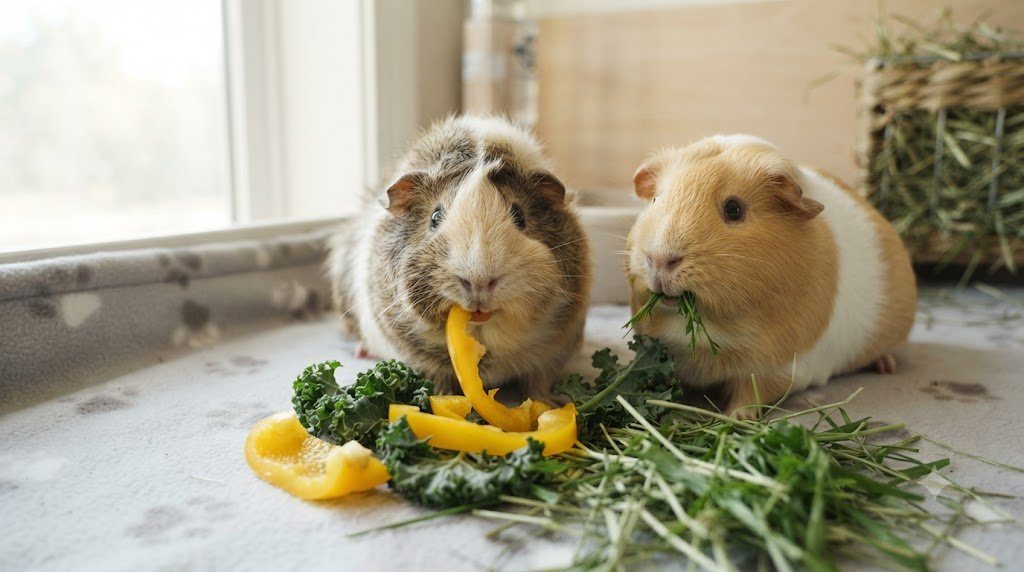
The domestic guinea pig, or cavy (Cavia porcellus), possesses one of the most distinctive and precarious metabolic profiles in veterinary medicine. Along with humans, non-human primates, and certain fruit bats, guinea pigs are among the very few mammals incapable of endogenous Vitamin C synthesis. This inborn biochemical defect renders them exquisitely vulnerable to dietary deficiency, where subclinical vitamin C deprivation precipitates multi-system collagen collapse, hemorrhagic arthropathies, dental instability, and immune failure.
The Molecular Genetics of the GULO Gene Mutation
In most mammalian species, ascorbic acid (Vitamin C) is synthesized in the liver from D-glucose via the glucuronic acid pathway. The final, critical rate-limiting step in this enzymatic cascade involves the conversion of L-gulono-1,4-lactone into ascorbic acid, catalyzed by the microsomal enzyme L-gulonolactone oxidase.
During evolutionary history, the ancestral caviomorph rodents experienced an accumulating series of non-synonymous mutations and nucleotide deletions within the GULO gene, transforming it into a non-functional pseudogene. Because ancestral cavies resided in habitats rich in fresh, wild vitamin-C-bearing flora, this loss of synthetic capacity carried no selective disadvantage. In modern domestic captivity, however, this genetic mutation means that if a guinea pig does not consume bioavailable ascorbic acid daily, bodily stores are depleted within two to four weeks, precipitating acute Hypovitaminosis C (Scurvy).
The Biochemical Function of Ascorbic Acid in Collagen Cross-Linking
Ascorbic acid serves as an obligate electron-donor cofactor for two vital intracellular enzymes: prolyl hydroxylase and lysyl hydroxylase. These enzymes are responsible for post-translational hydroxylation of proline and lysine residues during the synthesis of procollagen.
Without hydroxyproline, newly synthesized collagen polypeptide chains cannot form stable triple-helix configurations; they become structurally defective and undergo rapid intracellular degradation. Because collagen is the primary structural protein comprising capillary basement membranes, articular joint cartilage, skin, and periodontal ligaments, defective collagen synthesis leads to:
- Widespread Petechial Hemorrhages: Capillary fragility causes spontaneous micro-vascular bleeding into joints, periosteum, and subcutaneous tissue.
- Swollen, Painful Stifles and Elbows: Hemarthrosis causes intense joint pain, leading to the classic ‘bunny-hopping’ gait, reluctance to move, and vocalizations of distress.
- Periodontal Ligament Failure: Weakened collagen anchoring teeth into alveolar bone causes premature tooth loosening, malocclusion, and anorexia.
- Profound Immunosuppression: Ascorbate is vital for leukocyte phagocytosis; deficient cavies succumb rapidly to secondary bacterial pneumonia (Bordetella bronchiseptica).
| Life Stage / Clinical Status | Daily Ascorbic Acid Requirement | Target Biomarker Level | Clinical Dietary Recommendation |
|---|---|---|---|
| Healthy Maintenance Adult | 10 to 20 mg / kg body weight / day | Plasma ascorbate > 0.5 mg/dL | High-quality stabilized pellets + fresh dark leafy greens (bell peppers, kale) |
| Juvenile Growth / Pregnant Sow | 30 to 40 mg / kg body weight / day | Plasma ascorbate > 0.8 mg/dL | Alfalfa-based transition pellets + targeted ascorbate tablets |
| Clinical Scurvy (Therapeutic) | 50 to 100 mg / kg body weight / day | Immediate tissue saturation | Direct oral syringe administration of liquid ascorbic acid (treat 2-4 wks) |
| Post-Surgical / Trauma Recovery | 30 to 50 mg / kg body weight / day | Accelerates wound healing | Pure oral tablets or liquid drops; avoid sugary treat pastes |
A ubiquitous but dangerous pet supply myth is adding liquid Vitamin C drops to the guinea pig’s water bottle. Ascorbic acid is highly sensitive to light, oxygen, and trace minerals; it degrades by 50% within hours in open water. Furthermore, it alters the water’s taste, causing animals to refuse water, triggering fatal dehydration. Always administer Vitamin C via fresh vitamin-dense vegetables (especially green and yellow bell peppers) or direct oral tablets.
Calcium-to-Phosphorus Balancing and Prevention of Urolithiasis
In addition to vitamin C management, guinea pig diets require strict calcium regulation. Cavies absorb calcium with exceptional efficiency, excreting up to 80% of excess calcium through the kidneys as calcium carbonate crystals, giving cavy urine its normal cloudy appearance. However, feeding calcium-dense legume hays (Alfalfa) or high-calcium vegetables (spinach, parsley) to adult guinea pigs precipitates bladder stones (urolithiasis), causing intense stranguria, hematuria, and urethral blockage.
The Fructooligosaccharide and Soluble Sugar Threat to Cavies
Pet stores frequently sell colorful commercial yogurt drops, dried fruit mixes, and honey-coated seed sticks targeted at guinea pigs. These high-sugar, starch-dense items are disastrous for cavy digestive biochemistry. Guinea pig cecal microbes are adapted exclusively to complex cellulose and hemicellulose. Feeding simple sugars causes explosive bacterial fermentation, dropping cecal pH and permitting fatal clostridial dysbiosis. The ideal guinea pig treat is fresh herbs (cilantro, dill) and crisp bell peppers, never commercial sugary confections.
Pathology of Guinea Pig Hypovitaminosis C: The Scorbutic Epiphyseal Cleavage
The musculoskeletal manifestations of scurvy in guinea pigs are particularly severe at the costochondral junctions of the ribs and the epiphyses of long bones (distal femur and proximal tibia). In growing juveniles and active adults, continuous mechanical weight-bearing stresses bone growth plates.
Normal bone elongation requires calcification of cartilaginous matrix produced by chondrocytes, followed by rapid deposition of osteoid collagen by osteoblasts. In ascorbic acid deficiency, chondrocytes continue to multiply, but osteoblasts fail to synthesize the collagenous organic matrix. A fragile, unmineralized zone of calcified cartilage called the scorbutic lattice forms across the growth plate. Under normal movement, this weakened lattice fractures, causing micro-fractures, periosteal detachment, and exquisite skeletal pain, causing affected cavies to freeze and refuse all movement.
| Fresh Produce Source | Ascorbic Acid Content (mg / 100g) | Calcium Level (mg / 100g) | Ca:P Ratio | Suitability for Daily Guinea Pig Rations |
|---|---|---|---|---|
| Yellow Bell Pepper | 183 mg | 11 mg | 0.5 : 1 | Exceptional (Superb daily Vitamin C source) |
| Red Bell Pepper | 127 mg | 7 mg | 0.3 : 1 | Exceptional (High Vitamin C, low calcium) |
| Fresh Parsley | 133 mg | 138 mg | 2.4 : 1 | Moderate (High calcium; feed sparingly to prevent stones) |
| Raw Kale | 120 mg | 150 mg | 2.1 : 1 | Moderate (High calcium and goitrogens; limit to 2x/wk) |
| Green Bell Pepper | 80 mg | 10 mg | 0.5 : 1 | Excellent (Standard low-sugar daily staple) |
| Romaine Lettuce | 24 mg | 33 mg | 1.1 : 1 | Good (Hydration and fiber; lower Vitamin C) |
| Fresh Strawberries | 59 mg | 16 mg | 0.6 : 1 | Occasional Treat (High sugar promotes gut dysbiosis) |
The Cecal Dysbiosis Trap: Antibiotic Toxicity in Cavies (PLACE)
When guinea pigs exhibit anorexia or secondary bacterial infections from scurvy, veterinarians must avoid administering narrow-spectrum antibiotics that destroy Gram-positive bacteria. The cavy cecal microbiome is heavily dominated by delicate Gram-positive beneficial anaerobes. Administering Penicillins, Lincosamides, Ampicillin, Cephalosporins, or Erythromycin (the ‘PLACE’ antibiotics) destroys the commensal microflora.
This sudden microbial vacuum permits fatal overgrowth of toxin-producing Clostridium difficile and Clostridium perfringens, causing acute necrotizing enterotoxemia and death within 24 to 72 hours. Safe antimicrobial selections for guinea pigs are limited strictly to fluoroquinolones (Enrofloxacin), trimethoprim-sulfa (TMS), and chloramphenicol.
Surgical Cystotomy and Urolithiasis Prevention in Cavies
When guinea pigs develop calcium carbonate bladder stones (urolithiasis), medical dissolution is impossible. Calcium carbonate stones are impervious to dietary pH manipulation; surgical extraction via Cystotomy is the only curative intervention. Due to the miniature anatomy of guinea pigs and their high sensitivity to hypothermia and anesthesia, cystotomy requires microsurgical technique and delicate tissue handling.
Post-surgical recurrence rates exceed 30% to 50% unless long-term dietary protocols are strictly enforced:
- Strict Hay Auditing: Transition entirely to Orchard Grass or Meadow Hay. Avoid Alfalfa hay completely (Alfalfa contains 1.4% calcium compared to 0.4% in grass hays).
- Drinking Water Demineralization: Provide filtered or reverse-osmosis drinking water. Tap water in hard-water municipalities contains high concentrations of dissolved calcium and magnesium.
- Potassium Citrate Supplementation: Oral potassium citrate acts as an alkalinizing chelator; citrate binds to urinary calcium, forming soluble calcium citrate complexes that pass harmlessly in urine, reducing the formation of insoluble calcium carbonate crystals.
| Hay Variety / Forage | Crude Protein (%) | Crude Fiber (%) | Calcium Content (%) | Phosphorus (%) | Suitability for Adult Guinea Pigs |
|---|---|---|---|---|---|
| First-Cutting Timothy Hay | 7.0% – 9.0% | 32% – 35% | 0.40% | 0.20% | Optimal (Coarse abrasive stems, low calcium) |
| Orchard Grass Hay | 8.0% – 10.0% | 30% – 33% | 0.33% | 0.25% | Excellent (Soft texture, very low calcium) |
| Meadow / Botanical Hay | 8.0% – 9.5% | 28% – 32% | 0.38% | 0.22% | Excellent (High variety, safe mineral profile) |
| Oat Hay (Coarse seed-head) | 8.0% – 10.0% | 28% – 30% | 0.42% | 0.25% | Good (High fiber; remove heavy grain heads) |
| Alfalfa Legume Hay | 16.0% – 20.0% | 22% – 25% | 1.45% | 0.28% | CONTRAINDICATED for Adults (Urolithiasis) |
Ovarian Cystic Disease in Female Cavies (Sows)
Over 75% of intact female guinea pigs over 2 to 3 years of age develop Cystic Ovarian Disease. Non-functional serous cysts cause coelomic distension, while hormone-secreting follicular cysts hypersecrete estradiol, causing bilateral symmetrical non-pruritic alopecia along the flanks, crusty nipples, and hyper-sexuality. Medical management utilizes GnRH agonists or hCG, but curative resolution requires elective ovariohysterectomy performed by an experienced exotic veterinary surgeon.
Comprehensive Small Mammal Husbandry and Clinical Health Blueprint
Caring for small exotic herbivores and pocket mammals—including domestic rabbits, guinea pigs, chinchillas, hamsters, and ferrets—demands specialized knowledge of their non-traditional anatomical structures and high metabolic demands. Because these companion species are primarily prey animals, they mask physical weakness and pain with extreme subtlety. Establishing a meticulous husbandry routine is essential to ensuring their comfort, dental health, and long-term vitality.
The Daily Small Herbivore Health and Vitality Checklist
Execute this 5-point clinical evaluation daily across all small mammal companion enclosures:
- Fecal Pellet Dimension and Density: Inspect the litter pan or cage floor. Rabbit fecal pellets should be large, uniform, round, friable, and composed of visible crushed hay fibers. Small, hard, dark, misshapen, or strung-together pellets linked by fur signal early dehydration and impending GI stasis.
- Hay Consumption Velocity: Confirm that the animal is actively chewing coarse grass hay throughout the day. A healthy rabbit or guinea pig should consume a pile of hay equivalent to its own body size every 24 hours. A sudden drop in hay consumption is the earliest warning sign of molar dental spurs.
- Incisor Alignment and Facial Symmetry: Gently lift the lips to verify that upper and lower incisors meet in normal anatomical alignment without chipping or lateral curvature. Palpate the jawline along the ventral mandible for firm bony swellings or tooth root abscesses.
- Perianal Hygiene and Cecotrope Clearance: Check the perianal area for soiled fur or unconsumed cecotropes (‘sticky bottom’). While normal cecotropes are eaten directly from the anus, obese animals or animals with arthritis or dietary starch overload drop unconsumed cecotropes, creating an acute risk for flystrike (myiasis).
- Microclimate Temperature and Enclosure Ventilation: Verify that ambient enclosure temperatures remain strictly within the species-appropriate range (under 72°F / 22°C for rabbits and chinchillas) with continuous airflow and zero ammonia vapor accumulation.
| Small Companion Species | Expected Adult Lifespan | Core Dietary Requirement | Critical Environmental Hazard | Mandatory Veterinary Screening |
|---|---|---|---|---|
| Domestic Rabbit | 9 to 12+ Years | 85% Coarse grass hay, 10% fresh greens, 5% pellets | Ambient heat > 78°F; sudden diet changes | Biannual dental exam, RHDV2 vaccination |
| Guinea Pig (Cavy) | 5 to 8 Years | Unlimited grass hay, daily Vitamin C, fresh peppers | Antibiotics of the PLACE group; extreme cold | Annual dental exam, weight monitoring, Vitamin C status |
| Chinchilla | 12 to 18+ Years | Coarse Timothy hay, specialized chinchilla pellets | High humidity > 60%; ambient heat > 75°F | Dental radiography, dust bath hygiene, fur ring checks |
| Domestic Ferret | 6 to 9 Years | 100% High-fat animal protein; zero grains/sugars | Swallowed rubber foreign bodies; long daylength | Biannual blood glucose (insulinoma), Deslorelin implants |
In outdoor or warm indoor enclosures, blowflies (Lucilia sericata) are attracted to damp or cecotrope-soiled fur. Flies deposit hundreds of eggs that hatch within hours into flesh-eating maggots that burrow into the animal’s skin, causing fatal toxic shock. Check the rear end of rabbits and guinea pigs twice daily during warm months.
Microbiological Ecology: Probiotics, Prebiotics, and Cecal Re-Inoculation
When small exotic herbivores undergo antimicrobial therapy or recover from acute gastrointestinal hypomotility, the cecal microbial ecosystem requires active biological rehabilitation. The cecum relies on millions of symbiotic cellulolytic bacteria (principally Bacteroides species) and specific yeasts (such as Cyniclomyces guttulatus).
Standard commercial mammalian dairy-based probiotics (such as Lactobacillus acidophilus from yogurt) provide negligible biological benefits in lagomorphs and cavies because these bacteria do not colonize the cecum. Effective biological re-inoculation utilizes specialized veterinary prebiotics (fructooligosaccharides and purified beta-glucans) combined with Cecotrope Transfaunation: collecting healthy cecotropes from a bonded, disease-free donor rabbit and suspending them in oral electrolyte solution to feed to the convalescing patient, immediately restoring normal cellulolytic fermentation.
| Gut Biotherapeutic | Biological Composition | Target Microbial Mechanism | Clinical Application Context | Administration Route & Dosage |
|---|---|---|---|---|
| Cecotrope Transfaunation | Intact anaerobic cecal symbionts | Re-seeds native cellulolytic flora instantly | Post-enterotoxemia, severe RGIS recovery | Oral syringe suspension from healthy donor |
| Fructooligosaccharides (FOS) | Non-digestible prebiotic oligosaccharides | Selectively fuels beneficial bifidobacteria | Subclinical dysbiosis, soft cecotropes | Powder mixed into recovery herbivore gruel |
| Saccharomyces cerevisiae | Live beneficial yeast culture | Competes with fungal pathogens in gut lumen | Adjunct to systemic antibiotic therapy | Oral powder administered 2 hours post-antibiotic |
| Water-Soluble Pectin & Beta-Glucans | Plant structural soluble fibers | Forms protective mucosal lubricating barrier | Gastric ulceration, mechanical gut irritation | Oral electrolyte drench q8h |


